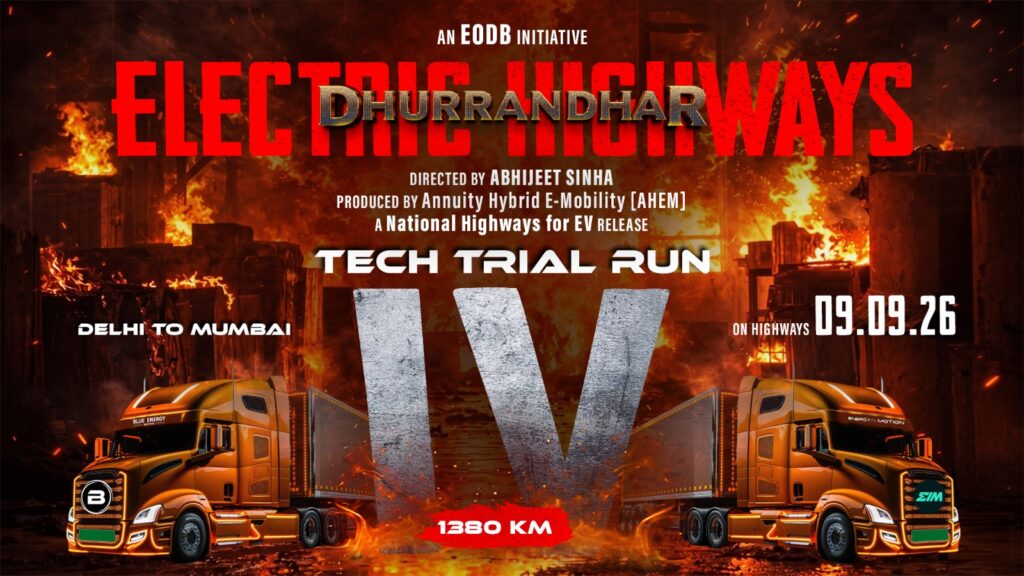

NHEV: A GEM for E-Mobility
As India charts an ambitious path toward clean mobility and digital governance, two transformative initiatives are taking centre stage: Annuity Hybrid E-Mobility (AHEM) and the Government e-Marketplace (GeM). Both are built on transparency, public-private participation, and citizen empowerment—but they serve fundamentally different purposes. Together, they represent a dual strategy: one reshaping infrastructure creation and the other revolutionising procurement.
AHEM: A New Dawn for Electric Vehicle Infrastructure
Annuity Hybrid E-Mobility (AHEM) is India’s pioneering infrastructure model, developed to solve the biggest bottleneck in EV adoption: charging infrastructure. Adapted from the Hybrid Annuity Model (HAM) used in highway construction, AHEM operates under a Public-Private-People Partnership (PPP) model, spreading the financial and operational responsibility across diverse stakeholders.
Funding the Future Together
Under AHEM, the investment burden is distributed across:
- 30% from public entities (government, PSUs, fuel stations),
- 30% from private companies,
- 30% from individuals or local communities,
- 10% from e-highway operators (like state authorities or NHEV).
This collaborative model not only reduces financial risk but also reduces dependence on government subsidies and encourages localized entrepreneurship.
Streamlined Yet Rigorous Application Process
The onboarding under AHEM follows a structured path:
- Expression of Interest (EOI) with a non-refundable ₹50,000 fee.
- Techno-commercial evaluation of project feasibility.
- Security deposit submission based on project scale.
- Letter of Recommendation (LOR) followed by a 30-day trial run.
- On successful performance, a Letter of Award (LoA) is issued, confirming scope and timelines.
Importantly, AHEM prioritizes innovation and readiness over cost (moving beyond L1/L2 bidding). Vendors who have been through the first phase are invited, ensuring technical soundness and scalability.
More Than Just Charging
AHEM-built stations are self-sustaining commercial hubs, offering:
- EV charging,
- Advertising space,
- Kiosks and ATMs,
- Food courts and retail rentals,
- Roadside assistance services.
This multi-revenue stream model ensures financial viability and enables investors to break even in under three years—an extraordinary shift from the traditional 30-year ROI seen in early EV infra investments.
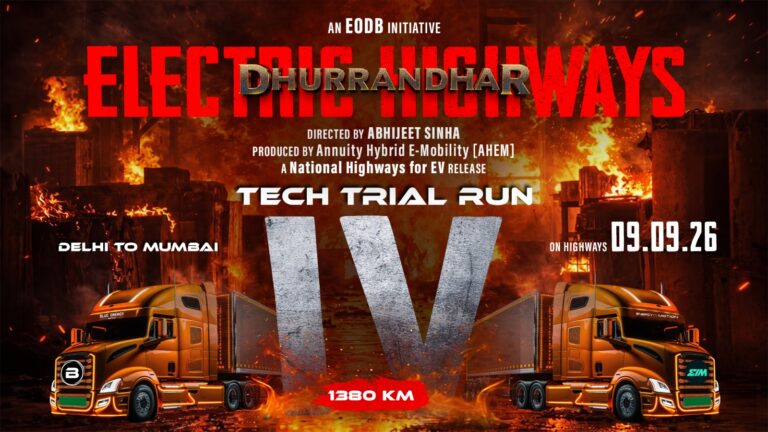
Proof of Concept: NHEV TECH-Trial Run
The 2020 NHEV pilot along the Delhi–Agra Yamuna Expressway validated the AHEM approach. Spanning 210 km, the TECH-Trial Run answered key financial, logistical, and operational questions while confirming that EV infrastructure, if done right, could be profitable, sustainable, and scalable.
AHEM even addresses the Indian socio-economic fabric—much like how PCOs and petrol pump licenses created generational businesses in the past, AHEM allows common citizens to own and operate EV stations without a license. Yet, a lack of structured outreach leaves many unaware of this opportunity.
GeM: A Digital Revolution in Public Procurement
Launched in 2016 by the Ministry of Commerce and Industry, the Government e-Marketplace (GeM) is India’s answer to outdated, opaque procurement processes. It’s a real-time, digital-first platform that enables government buyers to purchase goods and services from a vast network of sellers—ranging from large enterprises to MSMEs, startups, women entrepreneurs, and self-help groups.
Inclusive and Transparent
GeM removes traditional procurement roadblocks:
- No tenders or middlemen,
- Simple digital registration,
- Integrated with Aadhaar, PAN, GST, and PFMS,
- Transparent price discovery and bidding tools.
By leveling the playing field, GeM enhances Ease of Doing Business for vendors of all sizes and encourages Make in India through local procurement.
Highly Transactional, Not Infrastructural
However, GeM is not designed for infrastructure projects. Its core function ends at procurement—buying laptops, furniture, or services for offices—not building long-term capital assets like charging stations or roads.
AHEM vs GeM: Complementary, Not Competing
| Applications | Laptops, office chairs, manpower services | EV charging hubs, RSA stations, battery tech installations |
| Aspect | Government e-Marketplace (GeM) | Annuity Hybrid E-Mobility (AHEM) |
| Purpose | Procurement of goods/services | Financing and execution of EV infra projects |
| Ownership Model | Government to vendor | Public-Private-People Partnership (PPPP) |
| Funding Structure | 100% by government buyers | 30% Public, 30% Private, 30% People, 10% Operators |
| Focus | E-procurement and vendor inclusion | Sustainable EV infrastructure deployment |
| Bidding Criteria | Price-based (L1/L2) | Merit, technology, and readiness-based |
| Revenue Model | No recurring income for vendors | Self-sustaining through multiple commercial services |
| Risk Sharing | Borne entirely by government | Shared across government, private players, and citizens |
| Licensing Requirements | Not applicable | No license required to own/operate EV stations |
| Break-even Focus | Not relevant | Designed for 3-year investor break-even |
Conclusion: Two Pillars of a New India
While GeM is democratizing how the government buys, AHEM is revolutionizing how India builds the future of clean transport. One empowers sellers; the other empowers stakeholders. One is digital; the other is infrastructural. Together, they represent India’s commitment to inclusion, innovation, and impact.
As the country accelerates toward electric mobility and digital governance, AHEM and GeM will shape the backbone of a self-reliant and sustainable Bharat—one charge point and one transaction at a time.
Author : Abhijeet Sinha, Project Director – National Highway for EV (NHEV) | Co-Author : Nitya Gupta