
SOURCE : EVOLUTION AUTO INDIA | PUBLISHED : 2 FEB 2025
The Union Budget 2025-2026 was recently announced by Finance Minister Nirmala Sitharaman wherein she announced exemption of duties for 35 additional capital goods used in EV battery manufacturing. This would increase lithium-ion battery production in India paving way for e-mobility in India. With 20 percent funding increase compared to last year, schemes promoting electric vehicles have got a renewed push. Collective allocation for such schemes has risen to INR 5,322 crore in 2025-26 from INR 4,434.92 crore last year.
Meanwhile, Funding for PM E-DRIVE Scheme has increased by over 114 percent to INR 4,000 crore and the Scheme to Promote Manufacturing of Electric Passenger Cars in India (SMEC) has increased to INR 12 crore.
Mohal Lalbhai, Co-founder & Group CEO, Matter Motor
The Union Budget 2025 reinforces India’s Net Zero 2070 commitment with key measures to strengthen the clean-tech manufacturing ecosystem. The exemption of Basic Customs Duty (BCD) on critical EV minerals and duty-free status for 35 battery components will secure the supply chain, lower costs, and accelerate EV adoption. Support for MSMEs through capital access reforms and compliance ease will drive innovation and India’s global manufacturing ambitions. Additionally, tax incentives for green investments and startup-friendly policies will boost clean-tech growth, aligning with the ‘Make in India, Make for the World’ vision.
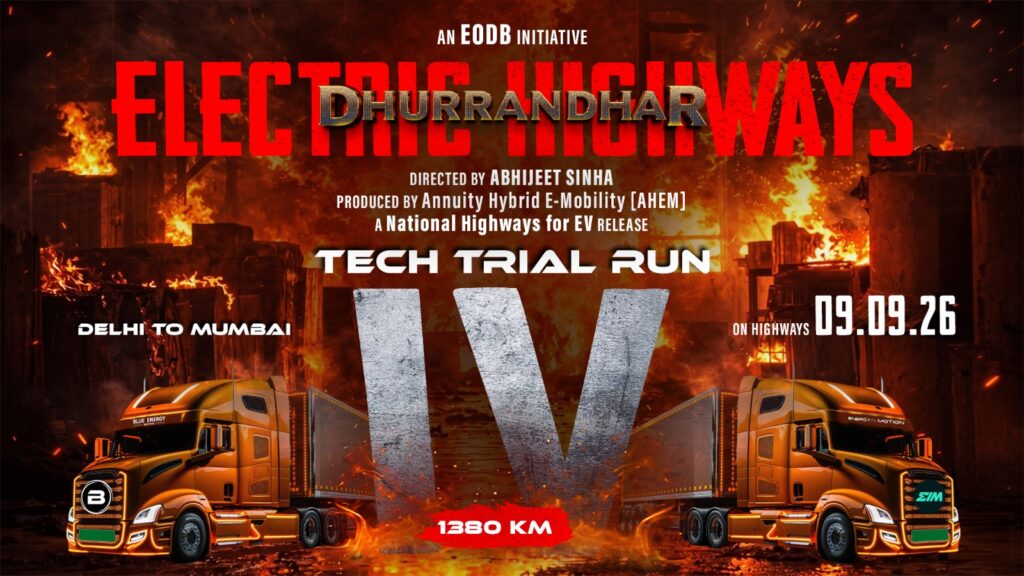
Abhijeet Sinha, Project Director-National Highways for Electric Vehicles (NHEV)

Budget 2025-26 introduced tax incentives, including full exemption from Basic Customs Duty (BCD) on key materials like cobalt powder, lithium-ion battery waste and scrap, lead, zinc, and twelve other critical minerals. This decrease in operational expenses will stimulate the expansion of India’s EV battery industry and enhance domestic production capabilities. It’s expected to result in cheaper EV batteries, making electric vehicles more affordable.
Further 35 additional items used in EV battery production and 28 items for mobile phone battery manufacturing have been made duty-free. The reduction in custom & duty complements the existing PLI schemes and will encourage backward integration, enabling Indian manufacturers to scale up operations efficiently.
However, missing Climate Financing outlays and a clear roadmap for expanding charging infrastructure limits the immediate impact on adoption. Funding to finance 25% of the cost of bankable projects upto ₹10 K crore for 2025-26 with ₹1.5 lakh crore additional interest-free loans and Urban Challenge Fund have the potential to support e-mobility initiatives, but a focused green transition fund would have boosted electric mobility differently.
MODINOMICS effects seems working as withing a 3 year timeframe from its launch PM Gati Shakti National Masterplan (2021) unfolded dynamic wings in Budget2025 with potential DATA offerings to private sector to integrate and develop top 50 tourist destinations with multimodal logistic and connectivity in partnership with state govt, hotels, mobility and logistic players.
Electric Mobility need to achieve faster adoption that warrants immediate action is needed in the form of stronger incentives for fleet electrification and a rapid expansion of charging networks. The industry expected beyond PM E-Drive from budget to a proactive measure to position India as a competitive global player in the EV market. Recent guidelines on charging infrastructure and battery swapping could have taken mission mode with increase investor confidence and accelerate the transition to EVs.
N.P Ramesh, COO and Co-Founder, Orb Energy
With the 2025 budget announcement, Finance Minister Nirmala Sitharaman has set a clear path for India’s clean tech revolution. The National Manufacturing Mission aims to accelerate domestic production of solar cells/panels, and EV storage batteries ensuring that India not only strengthens its ‘Make in India’ vision but also becomes a key player in global supply chains. The reduction of BCD on Lithium batteries is a very welcome step, as Storage goes along with increased adoption of renewable energy.
Alongside this, the focus on Industry 4.0 opens up exciting opportunities for our youth to lead the charge in innovation, creating a sustainable and energy-efficient future for generations to come. This is more than just a step toward economic growth—it’s a bold move to make India a global hub for clean energy solutions, driving job creation, reducing dependence on imports, and ultimately contributing to India’s clean energy goals.
Sandeep Aggarwal, Founder & CEO, Droom
We commend the Finance Minister for coming up with a forward-looking budget and believe that it is focused on driving inclusive growth, giving a boost to India’s burgeoning MSME & Start-up sector. We particularly appreciate the expanded scope and fresh contribution of INR 10,000 CR as part of the “Fund of Funds” for start-ups. This is a huge step, when seen in the context of funding winter for start-ups and will certainly boost the entrepreneurial sentiment in the country. This development, coupled with establishment of Centres of Excellence for Skilling and AI, will further enable the next wave of entrepreneurship in the country. At the same time, the budget also recognised the contributions of MSMEs, enhancing credit access and facilitating tech upgradation. At Droom, we look forward to supporting the government’s key undertaking towards making India a global hub for manufacturing and innovation.
Rajesh Gupta, Founder & Director, Recyclekaro
The Union Budget 2025 takes a decisive step towards strengthening India’s battery recycling and manufacturing ecosystem. The exemption of Basic Customs Duty (BCD) on critical minerals like cobalt, lithium-ion battery scrap, lead, and zinc will enhance domestic resource availability, reduce dependency on imports, and accelerate value addition within India. This move aligns with India’s vision for a circular economy, fostering investment in battery recycling and EV supply chains. The addition of new capital goods for EV and mobile battery manufacturing will further boost local production and job creation.
Kuldeep Bhan, Group President, Global Metallurgy Business, Neterwala Group
The Union Budget 2025 lays a strong foundation for India’s manufacturing growth with the announcement of the National Manufacturing Mission. By prioritizing key areas such as ease of doing business, a future-ready workforce, empowerment of large companies and MSMEs, technology access, and product quality, this initiative will accelerate India’s journey toward becoming a global manufacturing hub. The government’s commitment to strengthening domestic manufacturing capacities and integrating Indian industries with global supply chains is a welcome step that will enhance the country’s competitiveness.
At Neterwala Group, we appreciate this visionary approach and look forward to leveraging these policy reforms to drive innovation, scale operations, enhance our skilled workforce, and contribute to India’s economic progress. Strengthening the ‘Make in India’ movement will not only generate employment but also position India as a key player in high-value, quality manufacturing on a global scale. This budget fuels optimism for a resilient and self-reliant manufacturing ecosystem, and we are excited to be part of this transformative journey.
Dr. Miniya Chatterji, CEO, Sustain Labs Paris
The Union Budget 2025 marks a good step towards a greener and more self-reliant India. By prioritizing domestic production of solar PV cells, wind turbine generators, and other clean energy technologies under the National Manufacturing Mission to reduce imports, India is moving toward self-reliance and climate resilience. The push towards promoting sustainable farming practices with the aim of reaching around 1.7 crore farmers through Prime Minister Krishi Yojana has the potential to have a big catalytic effect on mitigating India’s environmental challenges.
Additionally, the identification of MSMEs as an engine for growth can be a boost to employment, especially in the manufacturing sector. Finally, the target of 100GW nuclear energy by 2047 under the Nuclear Energy Mission will further add up to the country’s transition to net-zero. The budget for this year lays the groundwork for a more resilient India by promoting sustainable economic growth and self-sufficiency.
SOURCE : EVOLUTION AUTO INDIA | PUBLISHED : 2 FEB 2025